VBS: The 5-Night Communication Plan That Keeps Kids Safe
- Keith Barker
- Jun 16
- 4 min read

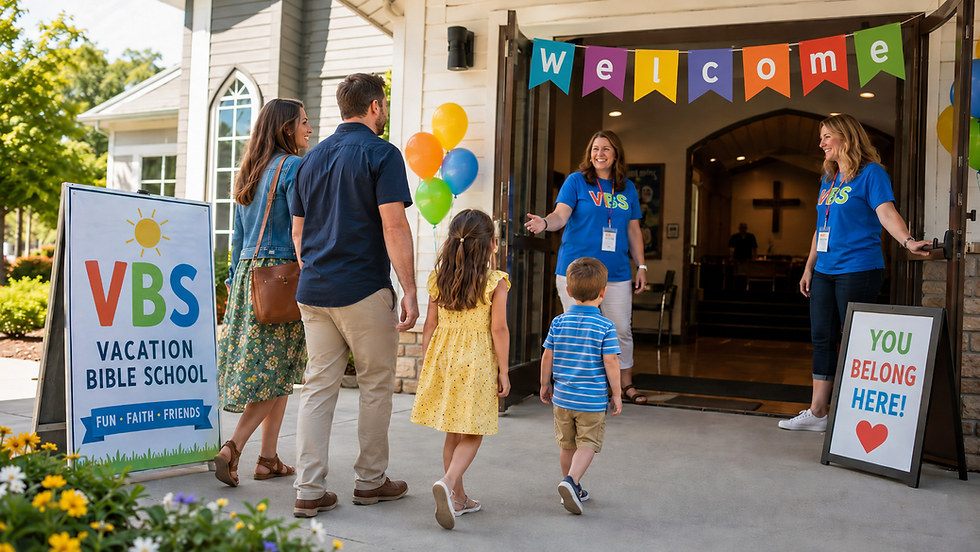
A five-night VBS doesn't fall apart because of the schedule—it falls apart when information doesn't move. Clear, disciplined communication keeps kids accounted for, keeps parents/guardians informed, and helps your team make good decisions when the pace picks up.
Each evening brings the same pressure points: check-in lines, parking congestion, crowded hallways, kids moving between stations, and parents/guardians trying to get to the right place at the right time. When staff and volunteers aren't sharing the same information, minor issues can escalate quickly—especially during transitions, pickup, or weather changes.
Start communication before Night 1
Prior to the initial evening, ensure alignment among church leadership, VBS directors, security team members, facilities personnel, medical support staff, parking teams, greeters, and station leaders. Implement a consistent plan each night, making adjustments only based on feedback from the previous night's activities.
Make sure everyone understands:
Who is in charge each night (and who is the backup decision-maker)
How information will be shared (radio, group text, phone tree) and the backup method
Who receives reports (medical, missing child, disruptive behavior, facility issue, weather)
What "urgent" looks like and how to escalate quickly
Communicate clearly with parents and guardians.
Parent communication supports crowd flows. Clear instructions reduce stress and keep traffic and foot traffic moving.
Before the week starts (and repeated each night), make sure parents/guardians know:
Where to park and where to enter (including an accessible entrance)
Check-in and pickup procedures (and what ID/tags are required)
Drop-off and pickup locations
Restroom locations and how restroom breaks are handled
What happens if the weather changes the plan (move indoors, early dismissal, shelter areas)
Who to contact if they have a concern during the program
Use signs, maps, announcements, and visible staff direction—especially for first-time families.
Keep communication active each evening.
Assign someone to monitor the pressure points each night:
Check-in
Hallways and station transitions
Outdoor areas
Pickup lanes
If a line is growing, a hallway is congested, or a child needs medical attention, the right people need to know immediately so leaders can adjust staffing, open another check-in point, redirect foot traffic, or request emergency assistance.
Improve as the week goes on.
One advantage of a five-night VBS is that you can improve each night.
After each evening, take 10 minutes with key leaders to review:
What worked well tonight
What caused delays or confusion
What needs to change tomorrow (staffing, signage, traffic flow, station timing)
Small adjustments each night can prevent bigger problems later in the week.
Weather decision trigger (simple and clear)
Outdoor activities are great—until weather forces a fast change. Decide this before Night 1:
Who makes the call to move indoors or pause activities (Event Lead + Backup)
What triggers the call (if thunder is heard or lightning is seen, high winds, heavy rain, extreme heat)
Where everyone goes (primary indoor shelter areas + overflow)
How you'll announce it (staff message + prepared announcement to parents/guardians)
Suggested staff message: "Weather move—implement indoor plan. Outdoor teams guide families to [location]. Station leads hold kids in place until escorted."
Missing-child mini-protocol (specific steps)
If a child can't be located, speed and coordination matter.
Confirm (30 seconds): last known location/time + clothing description
Notify leadership immediately: "Missing child—VBS. Last seen at [location] at [time]. Description: [clothing/age]. Start protocol."
Avoid using the child's name on the open radio.
Control exits: assign volunteers to doors/gates/parking lot edges
Search smart: last-known area first, then restrooms, playground/outdoor boundaries, hallways, snack areas
Family liaison: one leader stays with the parent/guardian and gathers details
Escalate: call 911 if there's a credible sighting leaving the property, suspicious behavior, a high-risk child, or no confirmed sighting within your preset time threshold
Check-in and pickup controls (reduce confusion and risk)
Use matching wristbands/tags (child + approved pickup adult)
Maintain an approved pickup list (and a process for changes)
No match / no ID / no release → escalate to the pickup lead
Define a late pickup procedure (who stays, where parents/guardians wait, how it's documented)
Medical readiness (basic but real-world)
Assign a first aid lead each night (and a backup)
Confirm first aid kit + AED locations and who can retrieve them quickly
Decide who meets EMS at the entrance and how you clear a route
Use a simple report format: location + what happened + what you need (first aid/EMS)
Notify parents/guardians as soon as the child is stable and supervised.
VBS Event Communication Plan Checklist (5 evenings)
Leadership & roles
☐ Nightly Event Lead + Backup Lead assigned
☐ Leads assigned for: Parking, Check-in, Station transitions, Outdoor areas, Medical, Security, Facilities
☐ Decision triggers defined (pause entry, move indoors, call 911, early dismissal)
Communication tools
☐ Primary method set (radios and/or group text)
☐ Backup method set
☐ Channel/group list confirmed and tested before Night 1
☐ Plain-language reporting standard: location + issue + need
Kids check-in/pickup
☐ Check-in/check-out process documented and staffed
☐ Wristbands/tags/approved pickup list in place
☐ Lost child reunification point established
☐ Missing-child protocol briefed (exit control + search roles + escalation trigger)
☐ Late pickup procedure defined
Weather plan
☐ Weather trigger defined + who makes the call
☐ Indoor shelter locations identified + overflow plan
☐ Prepared announcement/script ready
Medical readiness
☐ First aid lead assigned + backup
☐ First aid/AED locations confirmed
☐ EMS meet-point + access route confirmed
Parent/guardian communication
☐ Parking + entrance signage placed
☐ Check-in/pickup instructions posted and announced
☐ Map/wayfinding posted (optional QR code)
☐ Weather plan communicated (what parents/guardians should do and where to go)
Pressure points & staffing
☐ Staff posted at entrances, check-in, hallways, station transitions, outdoor gates, and pickup lanes
☐ Rovers assigned to relieve lines and respond to issues
☐ Scheduled leader check-ins during the evening (every 20–30 minutes)
After-action (each night)
☐ 10-minute debrief completed
☐ One improvement assigned for tomorrow
At the end of the day, successful VBS crowd management depends on teamwork, preparation, and disciplined communication. When your team shares the same plan—and information reaches the right decision-makers quickly—you reduce confusion, protect kids and volunteers, and create a safer, more professional environment for every family across all five nights.
About Next Watch Training Group
Next Watch Training Group, LLC provides professional, practical, reality-based training that strengthens safety, preparedness, and decision-making under pressure—helping churches and organizations protect their mission and serve their communities with confidence.


Comments